




You can use Do You Like Reading? (A2/B1 Lesson) before teaching this one.
This engaging A2–B1 speaking and grammar lesson explores the debate between podcasts and books, comparing traditional reading habits with modern digital listening. Students discuss how media consumption habits have evolved and whether listening to audiobooks compares to reading physical pages.
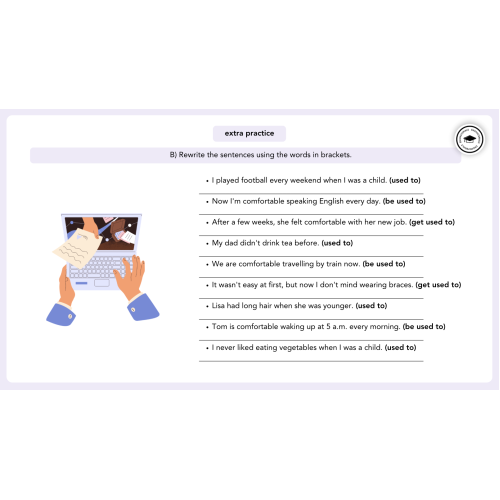
The lesson teaches the target grammatical structures: used to + verb / be used to + v-ing/noun / get used to + v-ing/noun. Students practice these forms by analyzing statements, discussing personal routines, examining scientific insights on brain processing, debating common stereotypes, and completing sentence-writing and dialogue exercises.
Lesson Structure:
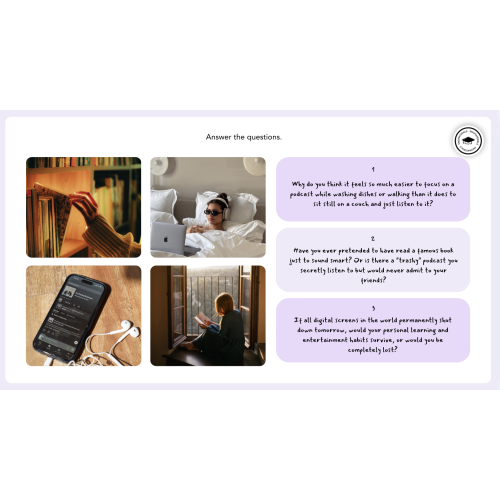
Warm-up: Answering introductory questions about multitasking with podcasts, secret media preferences, and a world without digital screens.
Grammar Introduction: Analyzing sample statements to identify patterns for used to, be used to, and get used toalongside clear rule breakdowns.
Sentence Completion: Finishing conversation prompts and personal reflections using target structure clues.
Photo Discussion: Making sentences about visual cues depicting past habits, comfort levels, and adaptation processes involving books and music.
Reading: Exploring the text "Ears vs. Eyes - What Does Science Say?" to discover how brain scans compare auditory and visual comprehension, alongside the challenges of multitasking.
Reading Comprehension: Answering specific analytical questions based on the science text.
The Interview: Conducting a paired interview asking and answering questions about reading habits, platform subscriptions, and preferences.
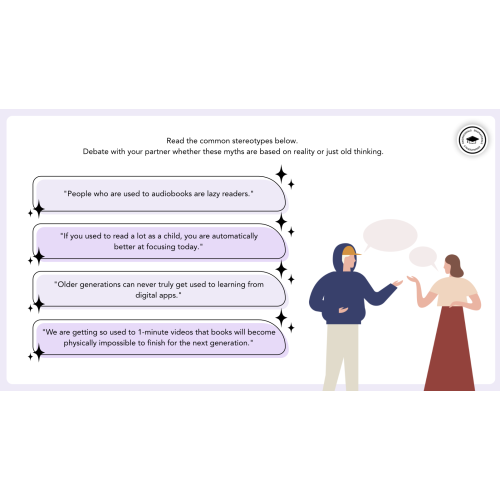
Myth Debating: Discussing common cultural stereotypes regarding audiobooks, digital apps, and reading focus.
Role Play: Working in groups of three as a traditional publisher, a tech startup CEO, and a mediator to debate library budgets, physical spaces, and learning formats.
Writing Advice: Formulating spoken or written guidance for a student struggling with reading stamina and smartphone distractions.
Speaking Cards: Choosing prompt cards for one-minute individual talks covering topics like book textures, generational habits, and audiobook playback speed.
Extra Practice
July 29, 2026